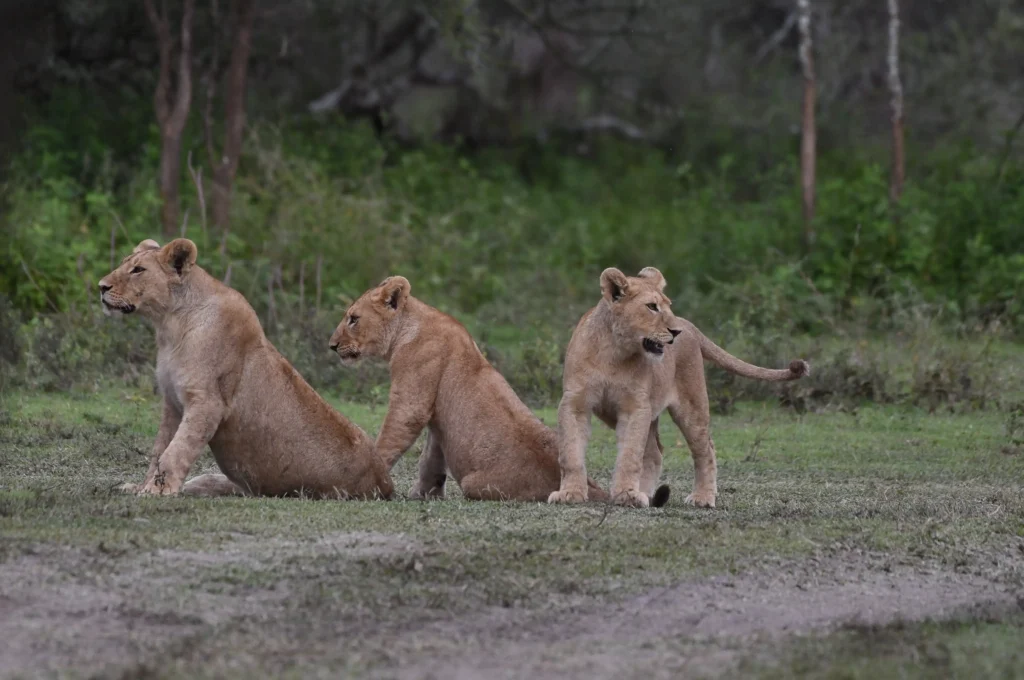
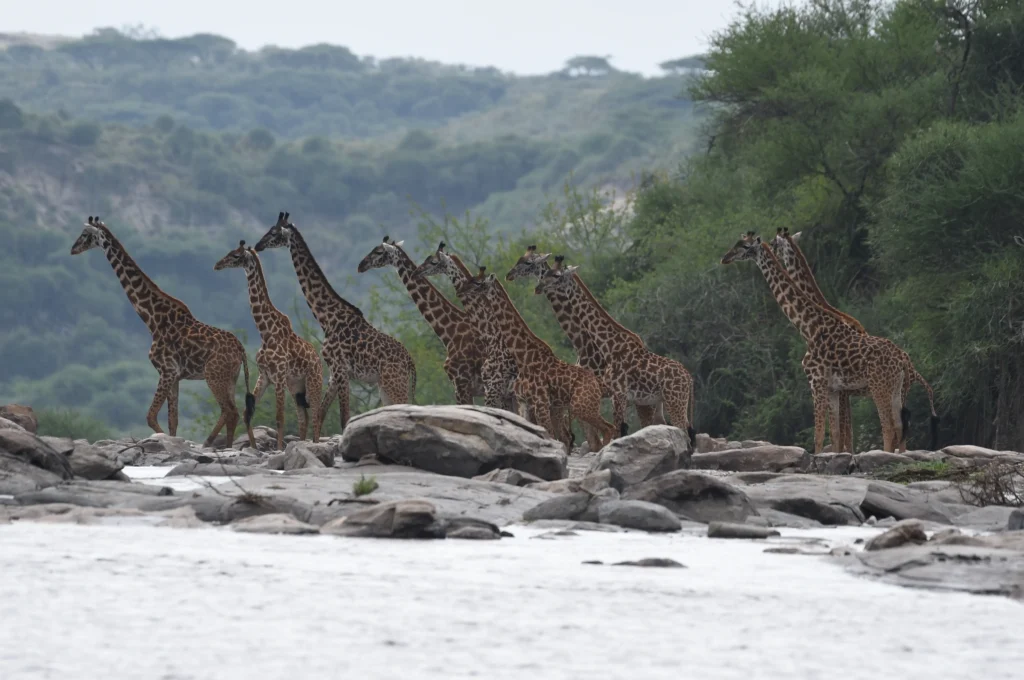
The Serengeti ecosystem in northern Tanzania hosts the Great Migration, the largest overland mammal movement on Earth. Over two million wildebeest, zebras, and gazelles travel a continuous, circular route across endless savannahs in search of fresh pasture and water. This massive herbivore presence sustains Africa’s densest concentration of large predators, including thousands of lions, leopards, and cheetahs. The park’s diverse terrain transitions from vast southern grasslands to rocky kopjes and northern riverine forests, earning its status as a UNESCO World Heritage Site.
For travelers, the park offers distinct wildlife experiences depending on the season and geographic zone. The calving season takes place on the southern plains from January to March, while dramatic river crossings occur in the north between August and October. Most safaris begin in Arusha, with visitors choosing between driving through the Ngorongoro Conservation Area or flying directly to internal airstrips. Lodging options accommodate various styles, ranging from budget-friendly public campsites and eco-friendly tented camps to ultra-luxury safari lodges.The Serengeti ecosystem in northern Tanzania hosts the Great Migration, the largest overland mammal movement on Earth. Over two million wildebeest, zebras, and gazelles travel a continuous, circular route across endless savannahs in search of fresh pasture and water. This massive herbivore presence sustains Africa’s densest concentration of large predators, including thousands of lions, leopards, and cheetahs. The park’s diverse terrain transitions from vast southern grasslands to rocky kopjes and northern riverine forests, earning its status as a UNESCO World Heritage Site.
For travelers, the park offers distinct wildlife experiences depending on the season and geographic zone. The calving season takes place on the southern plains from January to March, while dramatic river crossings occur in the north between August and October. Most safaris begin in Arusha, with visitors choosing between driving through the Ngorongoro Conservation Area or flying directly to internal airstrips. Lodging options accommodate various styles, ranging from budget-friendly public campsites and eco-friendly tented camps to ultra-luxury safari lodges.
- 9 Days
- Tour Start: Arusha
- Tour End: Arusha
- Min Age: 12
Itinerary
Upon arrival at Kilimanjaro International Airport, you are privately transferred to Legendary Lodge, a colonial-style retreat set amidst lush coffee plantations. Couples can unwind with spa treatments, candlelit dinners, and leisurely walks through the gardens. On the second day, you may choose to explore Arusha’s cultural highlights or simply relax together in the lodge’s serene atmosphere, enjoying the tranquility before the adventure begins.
- Private transfer from Kilimanjaro International Airport (JRO) to Legendary Lodge, a colonial‑style retreat set amidst lush coffee plantations.
- Couples enjoy spa treatments, candlelit dinners, and leisurely walks through the gardens.
- Day 2: Optional cultural tour of Arusha or simply relax together in the lodge’s serene atmosphere.
- Meal Plan: Full Board
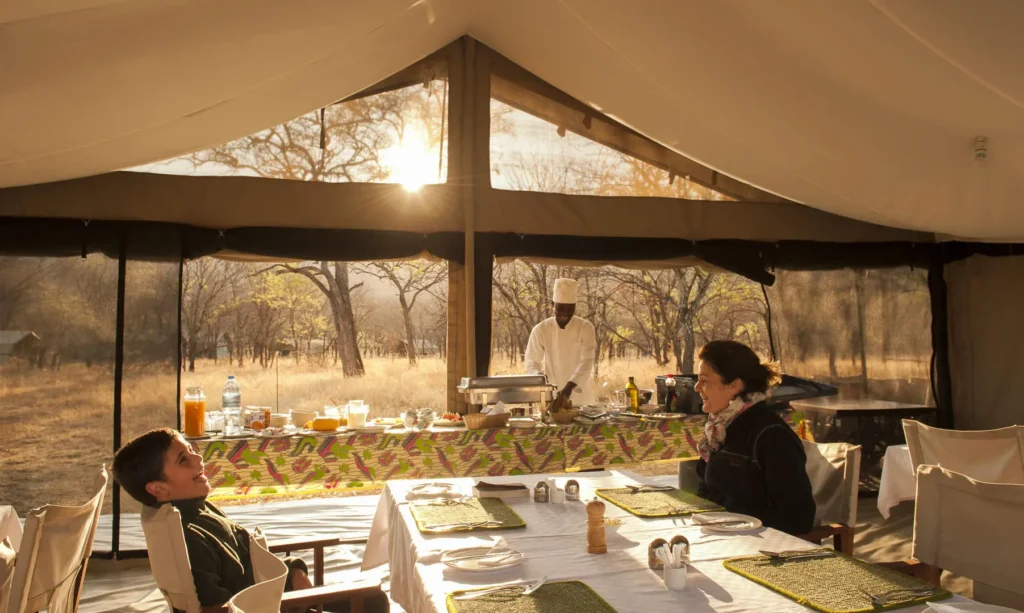
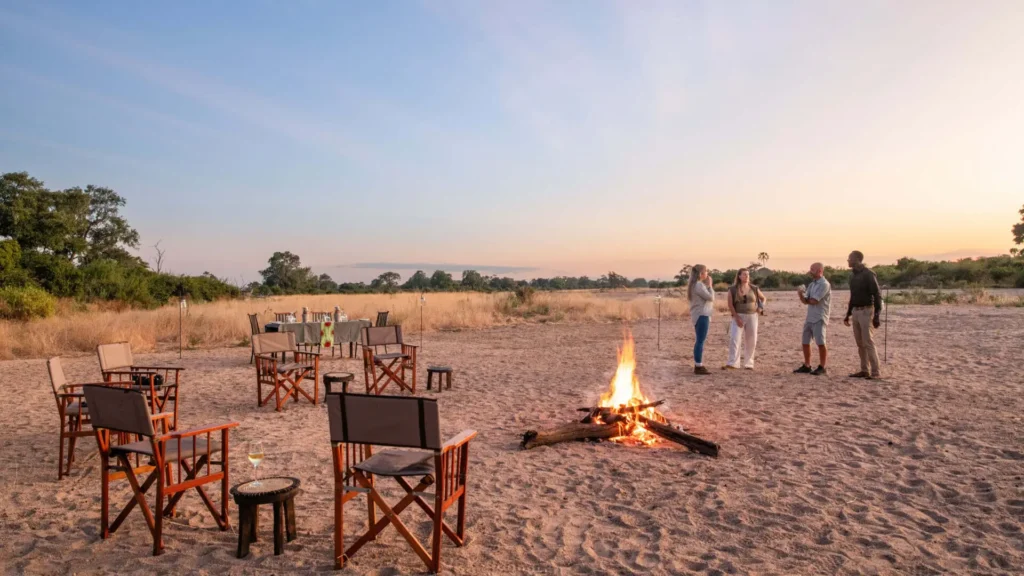
Travel to Mpingo Ridge Lodge, perched high above Tarangire’s baobab-studded plains. Morning and afternoon game drives reveal vast elephant herds, lions, and vibrant birdlife. Honeymooners enjoy private bush breakfasts and sunset sundowners arranged exclusively for two, while evenings bring starlit dinners on your private deck, accompanied by the sounds of the wild and the romance of Maasai storytelling.
- Scenic drive to Mpingo Ridge Lodge, offering panoramic views over Tarangire’s baobab‑studded plains.
- Morning and afternoon game drives: witness elephant herds, lions, and vibrant birdlife.
- Private bush breakfast and sunset sundowners arranged exclusively for honeymooners.
- Evenings: starlit dinners on your private deck, accompanied by the sounds of the wild.
- Meal Plan: Full Board
Your journey continues to Melia Ngorongoro Lodge, perched on the crater rim with breathtaking views. Day five offers leisure with spa indulgence or crater rim walks, while day six is dedicated to a full-day Ngorongoro Crater safari. Here, you encounter rhinos, hippos, and flamingos in this natural wonder, pausing for a romantic picnic lunch inside the crater. The evening concludes with a fireside dinner and cultural performance, adding intimacy to the wilderness.
- Transfer to Melia Ngorongoro Lodge, perched on the crater rim with breathtaking views.
- Day 5: Leisurely afternoon with spa indulgence or crater‑rim walks.
- Day 6: Full‑day Ngorongoro Crater tour—encounter rhinos, hippos, and flamingos in this natural wonder.
- Romantic picnic lunch inside the crater, followed by a fireside dinner back at the lodge.
- Meal Plan: Full Board
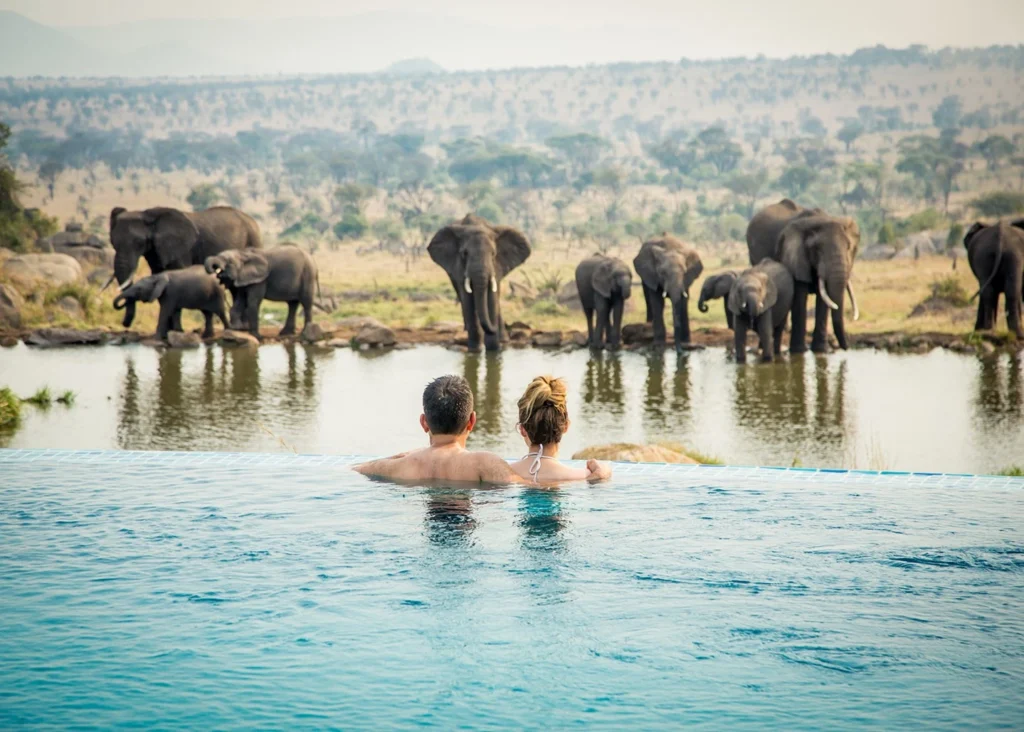
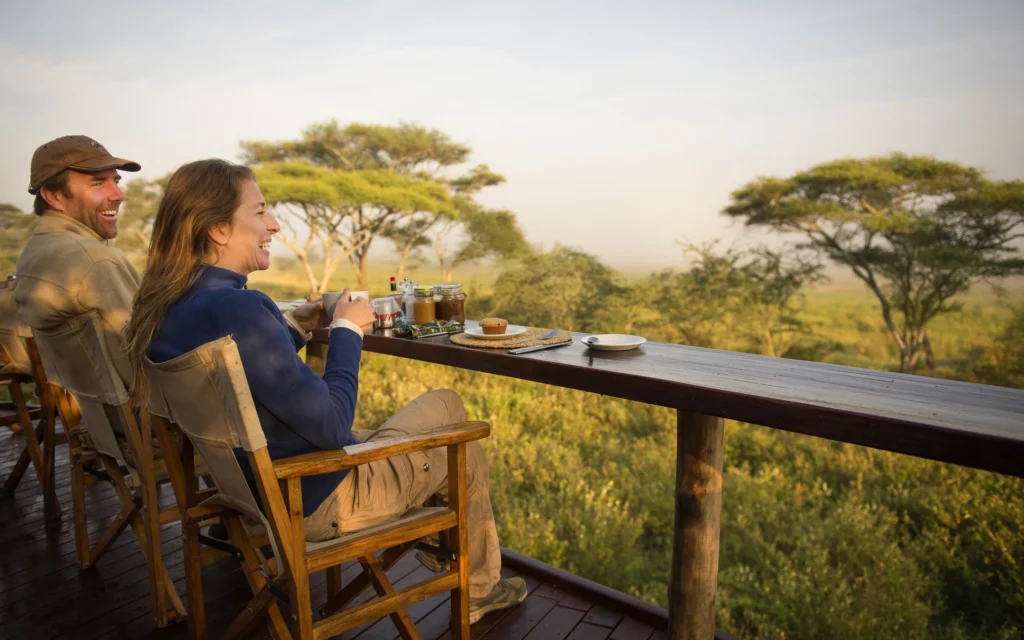
Drive into the legendary Serengeti, with game viewing en route to the Four Seasons Safari Lodge Serengeti. This lodge blends modern luxury with untamed wilderness, offering daily game drives that follow the Great Migration (seasonal), track big cats, and reveal the endless plains. Couples may opt for a sunrise hot air balloon safari with champagne breakfast, while afternoons are spent at the infinity pool overlooking a watering hole, indulging in spa rituals, or enjoying private wine tastings. Evenings are dedicated to gourmet dinners and stargazing from your suite’s terrace, creating unforgettable romantic moments.
Final Day – Departure
On your final morning, a flight from the Serengeti airstrip returns you to Arusha or Kilimanjaro International Airport. For added comfort before your international departure, an optional day room at Legendary Lodge is available, ensuring a seamless and restful conclusion to your honeymoon journey.
- Drive into the legendary Serengeti, with game viewing en route.
- Check in at the Four Seasons Safari Lodge Serengeti, blending modern luxury with untamed wilderness.
- Daily game drives: follow the Great Migration (seasonal), track big cats, and marvel at endless plains.
- Optional sunrise hot‑air balloon safari with champagne breakfast.
- Leisure afternoons: infinity pool overlooking a watering hole, couples’ spa rituals, and private wine tastings.
- Evenings: gourmet dinners and stargazing from your suite’s terrace.
- Meal Plan: Full Board
Enquire About This Tour
Speak with our safari experts to customize this itinerary and start planning your unforgettable Tanzania adventure.